Character copyright myth busters
If you’ve been face painting for any length of time, you’ve probably heard some strong opinions about painting recognisable characters.
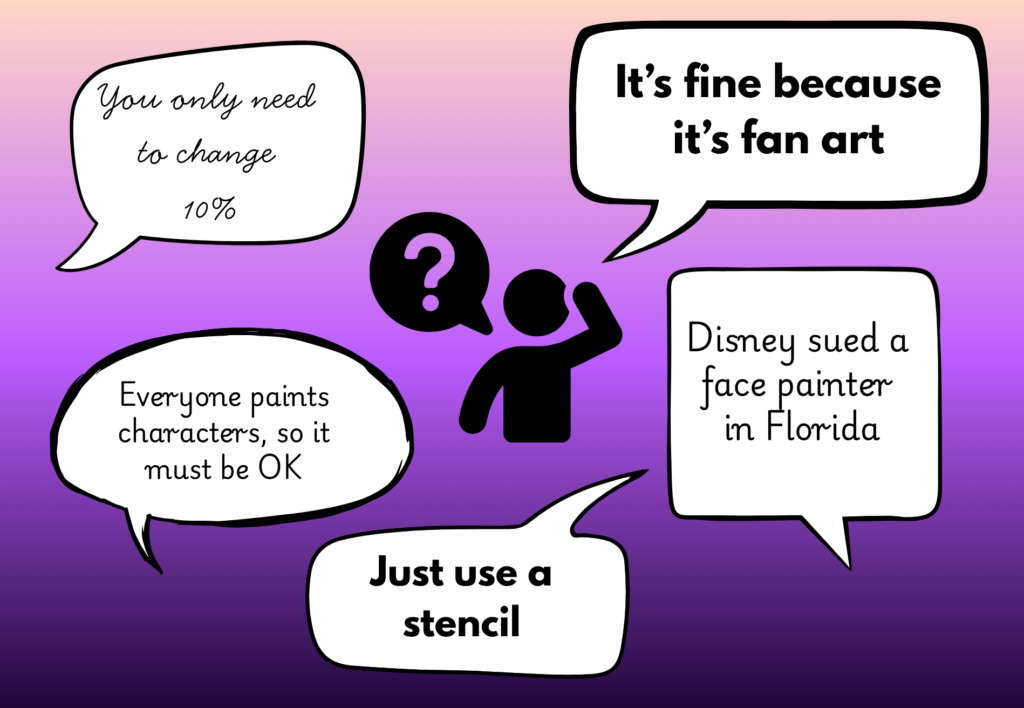
So are you allowed to paint Super Mario, Elsa, Superman, Stitch? Ever heard these comments? …
But how much of this is actually fact?
In this blog, we’re separating the myths from the things we can actually establish.
🌎 IMPORTANT NOTE
Copyright, trade mark and other intellectual-property laws vary from country to country. So this isn’t intended to provide legal advice for a particular country.
Instead, we’re looking at the general principles and common myths surrounding the use of recognisable fictional characters in face painting.
If you need to know whether a particular use is permitted where you live, check your country’s Intellectual Property guidance or seek advice from a qualified professional in your jurisdiction.
❌ MYTH: “Change 10% of the character and you’re safe.”
BUSTED
There is no universal 10% rule.
There isn’t a copyright calculator where if you change enough pixels suddenly the character becomes yours.
❌ MYTH: “If I paint the character myself, it’s my artwork, so it’s mine.”
BUSTED
The painting you create is your physical artwork. But that doesn’t necessarily mean you own the intellectual-property rights in the character you’re depicting.
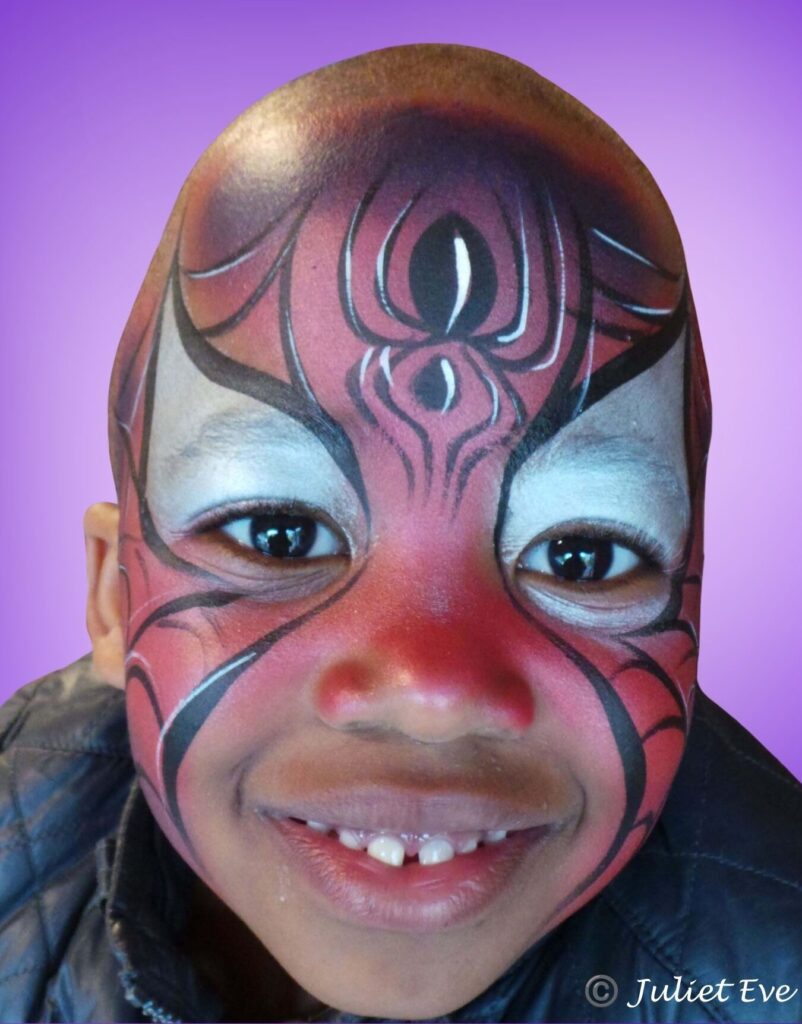
For example, you might create your own painted version of Spider-Man. Your painting and the Spider-Man character are two different things.
Creating your own version doesn’t automatically transfer ownership of the underlying character to you.
❌ MYTH: “It’s fan art, so it’s legal.”
BUSTED
“Fan art” describes artwork made by fans using existing characters or creative properties. Fan art is a description, not a worldwide licence.
Calling something fan art doesn’t automatically give you permission from Disney, Nintendo, Sega, Marvel, Pokémon or any other rights holder.
Some countries have specific exceptions or doctrines that may apply to certain types of fan art, but these vary considerably.
❌ MYTH: “It’s OK if I use a stencil.”
BUSTED
A stencil changes the technique you’re using. It doesn’t necessarily change the character you’re reproducing.
A stencil is a tool, not a copyright loophole.
❌ MYTH: “Everyone paints characters, so it must be legal.”
BUSTED
There are face painters all over the world painting Super Mario, Sonic, Spider-Man, Elsa, Stitch, Pokémon and countless other recognisable characters.
That tells us that people do it. It doesn’t establish that every use has been authorised.
Likewise, if you’ve painted characters for years without receiving a complaint, that’s a genuine part of your experience.
But “I’ve never been contacted” isn’t the same thing as “I have permission”.
Watermark JE portrait – 1
❌ MYTH: “If nobody complains, it’s legal.”
BUSTED
Rights holders decide how and when they enforce their intellectual property.
They may not know about a particular use. They may choose not to act. They may consider some uses more important to pursue than others.
The absence of a complaint doesn’t automatically mean that a use is authorised.
Equally, we shouldn’t assume that every character painting is going to result in a lawyer’s letter.
❓ MYTH: “Disney has sued face painters in Florida.”
UNVERIFIED
This is a story that has circulated within the face-painting community.
We haven’t found reliable evidence of a documented court case establishing that Disney sued a face painter specifically for painting Disney characters.
That doesn’t prove that no face painter has ever received a complaint, warning or cease-and-desist.
It simply means that we shouldn’t repeat an unverified story as established fact.
❌ MYTH: “I’ll just change the name.”
BUSTED
Changing the name doesn’t necessarily change the artwork.
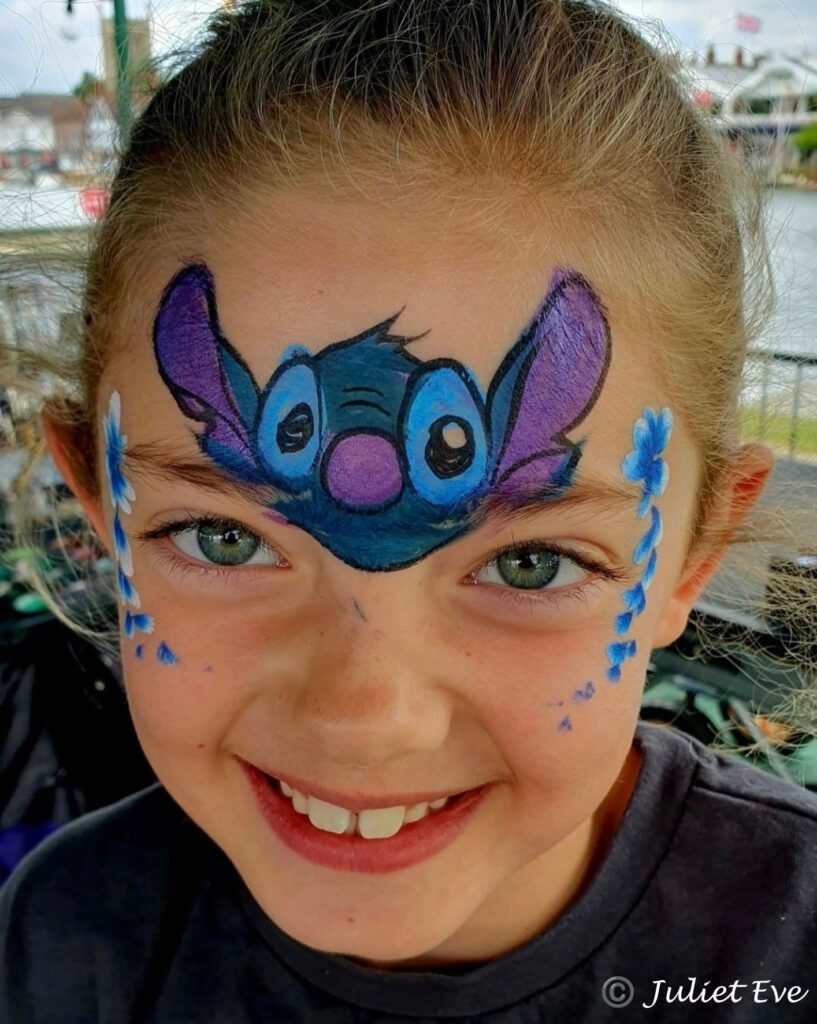
If you’ve painted an unmistakable Stitch and call it “Blue Alien”, you’ve changed the label, not necessarily the character you’re reproducing.
The same applies to:
Elsa → Ice Princess
Spider-Man → Web Hero
Super Mario → Italian Plumber
Changing the words isn’t a magic IP solution.
🤔 SO… I SHOULD NEVER PAINT RECOGNISABLE CHARACTERS?
Not necessarily.
This is where we want to be careful not to turn information about Intellectual Property (IP) into a rule telling every face painter how they must run their business.
Different artists make different choices.
Some face painters choose not to paint recognisable third-party characters at all.
Some create original characters based on a customer’s theme.
Some accept requests for recognisable characters and choose to accept the potential IP risk involved.
Our aim isn’t to tell you which choice you must make.
Our aim is to make sure you understand that there may be intellectual-property considerations when you reproduce a recognisable character belonging to somebody else.
If you decide to paint the character, do so knowing that:
– painting it yourself doesn’t automatically give you ownership of the character
– a stencil doesn’t automatically change the IP position
– changing a percentage doesn’t create a safe harbour
– calling it fan art doesn’t automatically provide permission
– changing the character’s name doesn’t necessarily change what you’re reproducing
– the law varies depending on where you live
It’s about making an informed decision rather than relying on a myth.
🎨 THREE WAYS FACE PAINTERS MIGHT APPROACH CHARACTER REQUESTS
1️⃣ Don’t offer recognisable branded characters
Some artists choose to keep their menus and services entirely original.
They might offer:
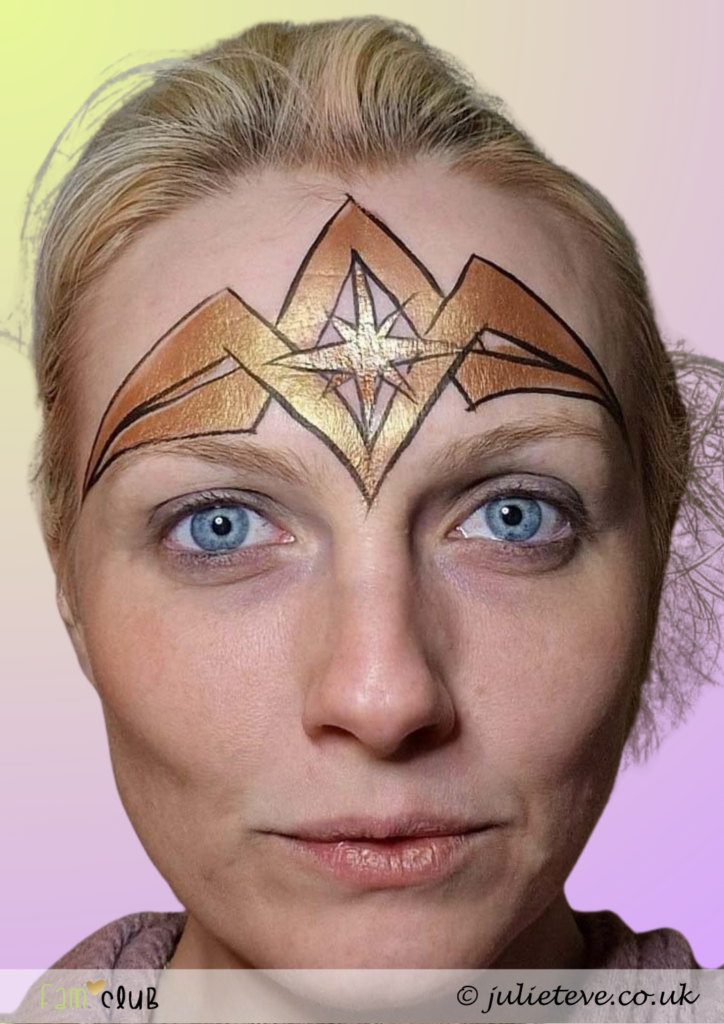
👑 Princesses
🦸 Superheroes
🦖 Dinosaurs
👽 Aliens
🧚 Fairies
🐲 Dragons
🎮 Gaming-inspired designs
🐾 Cartoon creatures
This avoids making specific third-party characters part of their advertised service.
2️⃣ Create something original from the customer’s request
A child asks for Stitch.
You could create a cute blue alien with your own features, markings, personality and design.
This is an opportunity to turn a customer’s request into something uniquely yours.
3️⃣ Accept the character request
Some artists choose to paint recognisable characters.
If that’s your choice, understand the potential IP considerations rather than assuming you’re automatically protected because you painted it yourself or because other artists do the same thing.
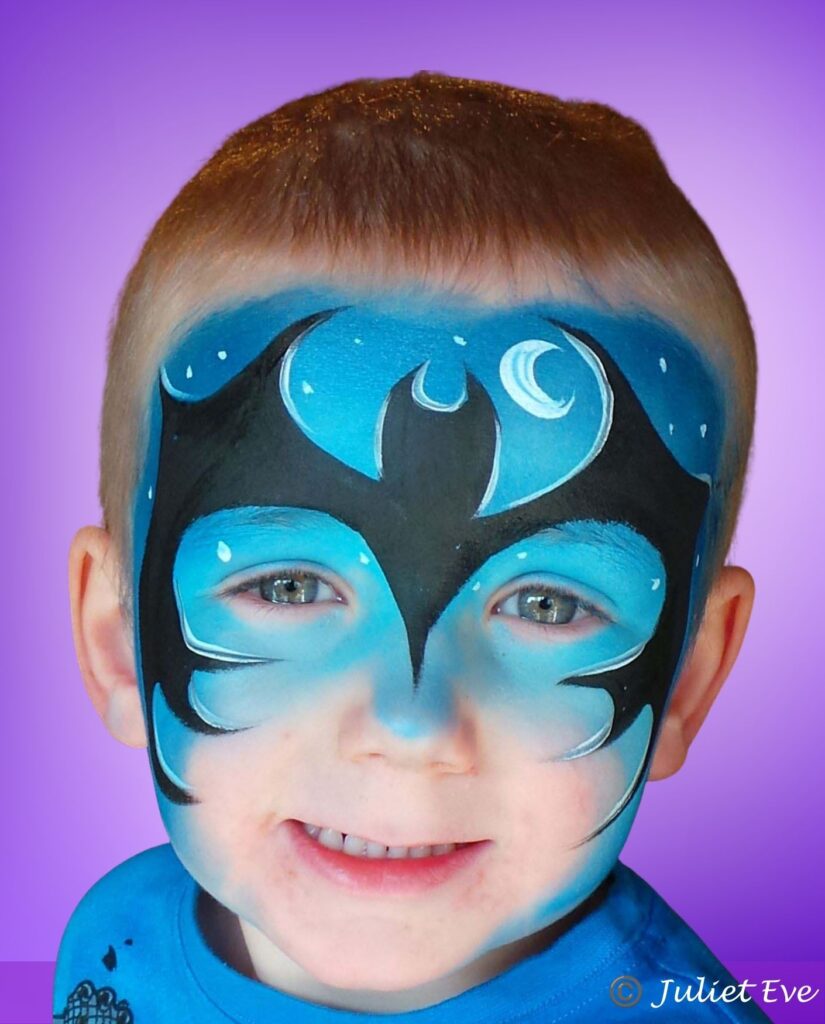
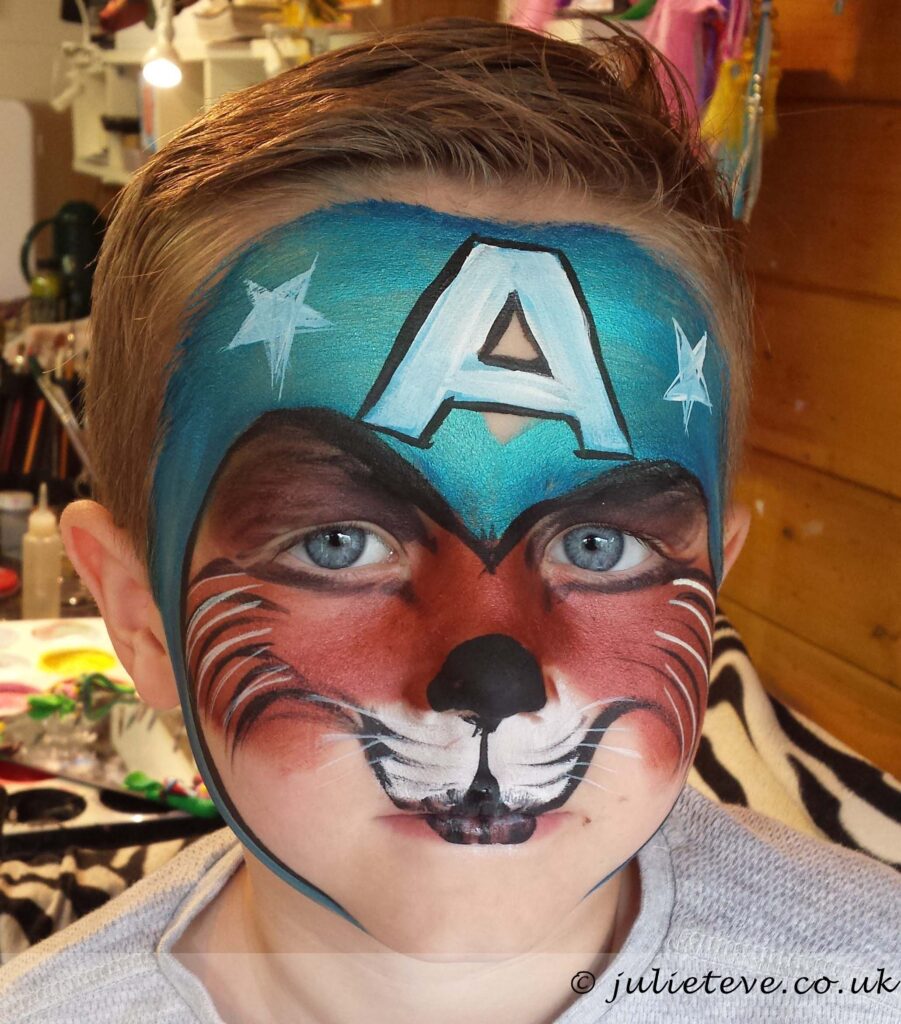
We’re not saying “Paint Spider-Man and you’ll be sued.”
But we’re also not saying “Everyone paints Spider-Man, so you’re definitely fine.”
The honest answer is more nuanced.
The circumstances matter, and the laws where you operate matter.
If you’re concerned about a particular character or commercial use, seek advice from an appropriately qualified professional in your country.
🌍 THE BIG TAKEAWAY
Different face painters make different choices.
Some avoid recognisable characters.
Some create original alternatives.
Some accept customer requests and choose to accept the potential risk.
Our job isn’t to tell you which decision to make.
Our job is to help you understand the difference between fact, assumption and face-painting folklore, so that you can make your own informed business decision.
- Know what belongs to you
- Know what belongs to someone else
- Understand the risks
- Make your own decision
And most importantly, don’t let a mythical 10% rule make your legal decisions for you. 😉