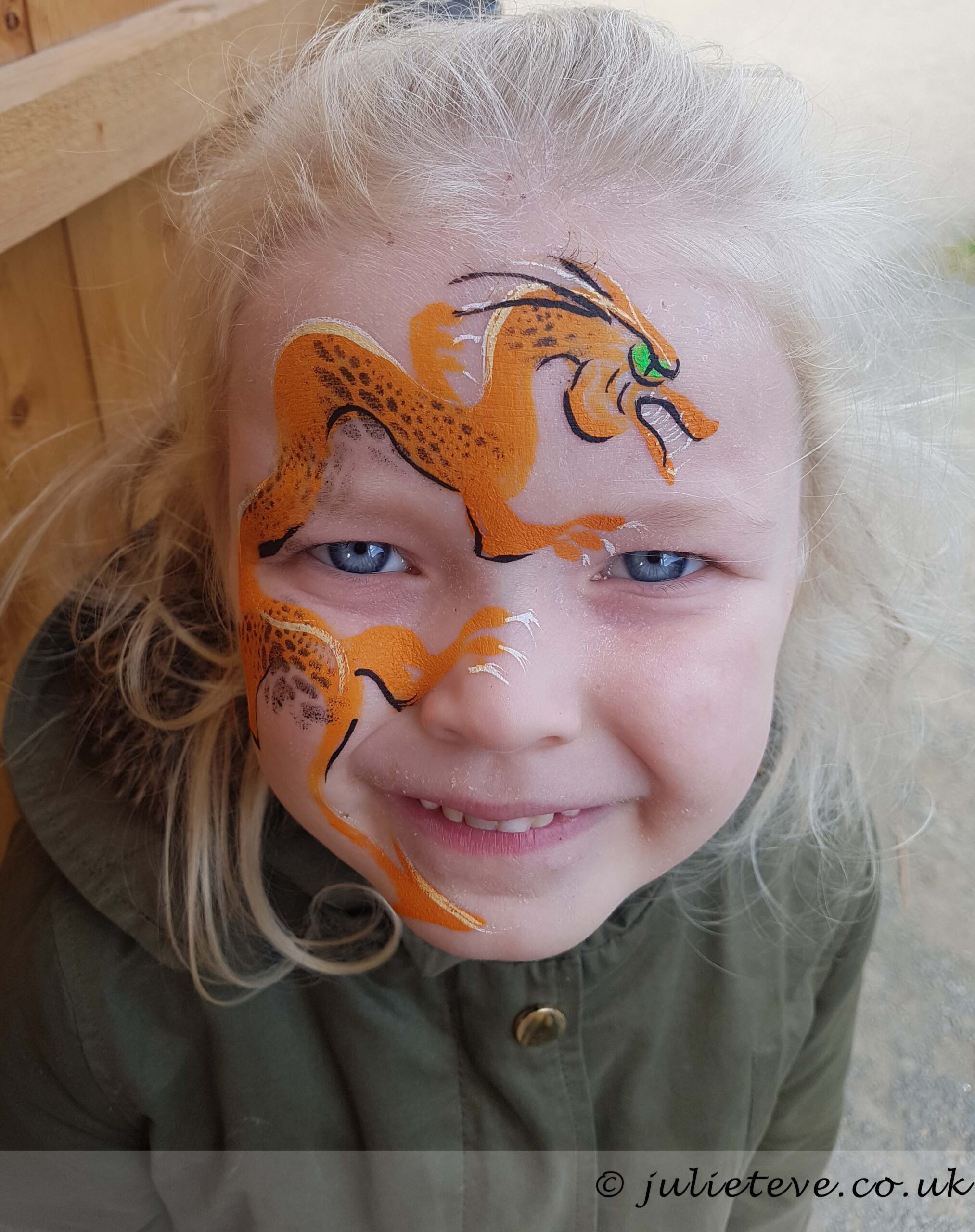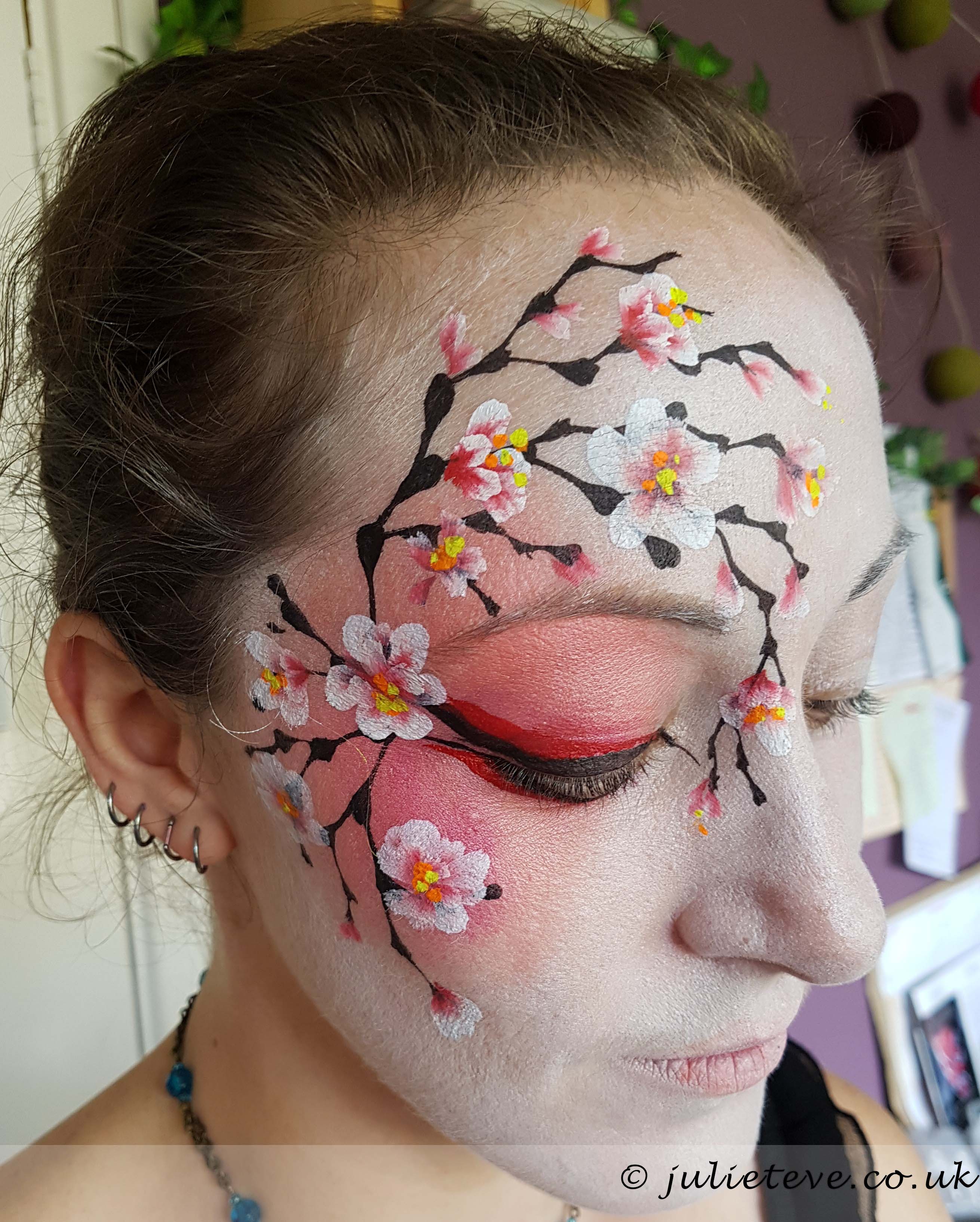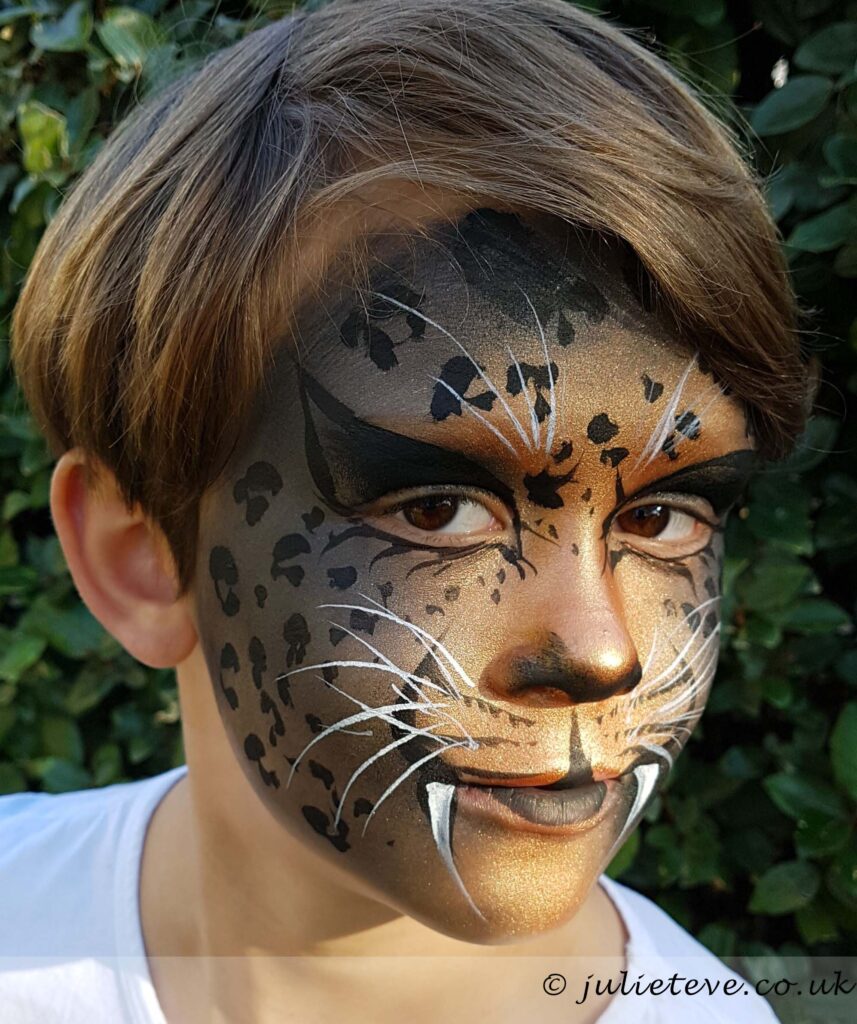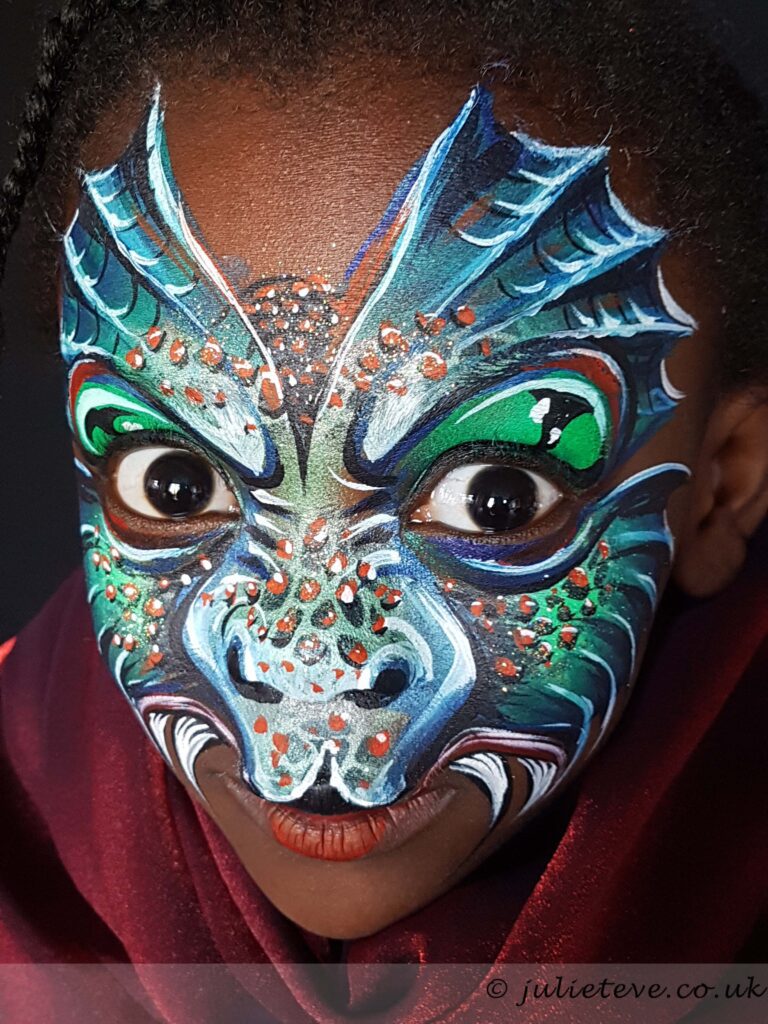
Telling a story with eyes
When face painters think about painting eyes on characters, the focus tends to be on purely technical aspects:
👁️ How do I paint a good unicorn eye?
👁️ What do dragons’ eyes look like?
👁️ Why do my dolphin eyes never quite look right?
But there’s a bigger question hiding underneath all of that: what is the eye actually saying?
Take a unicorn. Most people want it to look sweet, gentle, and magical. Yet as you’ve probably experienced (I certainly have), just a few slightly misplaced strokes – or the wrong brush – can completely change the personality. Suddenly that gentle unicorn looks angry, worried… or even a little sinister.
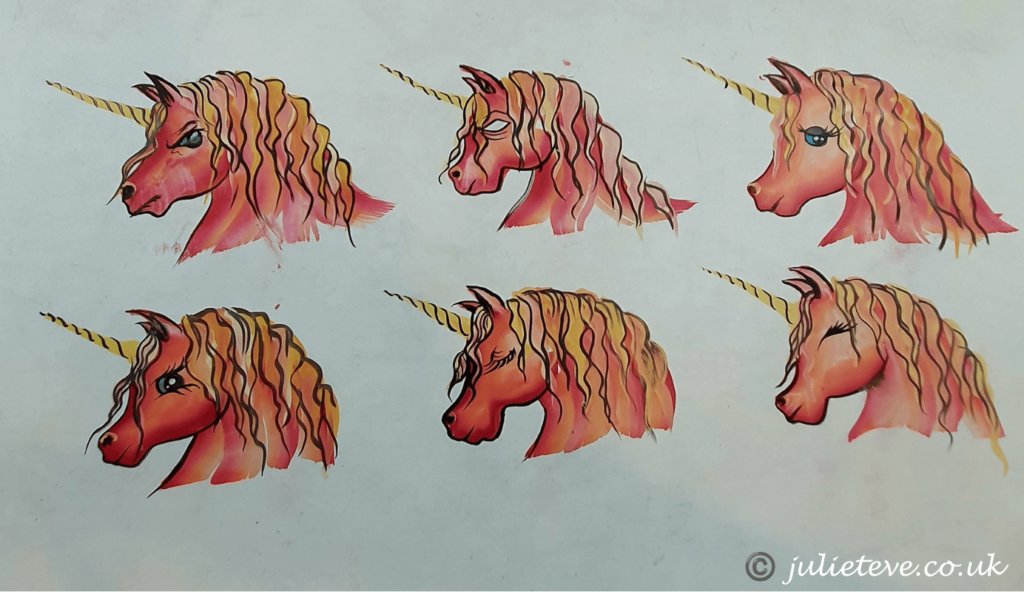
The same applies to dragons, snakes, sharks, and almost every character we paint. The eye isn’t just a detail – it’s the personality of the design.
Eyes read emotion first
When people think about facial expression, they often focus on the mouth. In reality, our brains register emotion in the eyes first. That’s why getting them right is so important – they become the focal point that everything else supports.
Expression is built from many small choices
What many face painters don’t realise is that expression isn’t created by one feature – it’s a combination of subtle decisions working together:
- The shape of the eye
- The size of the iris
- The shape of the pupil
- Eyelashes
- Eyelids
- Eyebrows
- The direction of the gaze
- Eye creases or shading
- And, of course, the all-important white highlight
Change any one of these, and the personality shifts.
A large, round iris with soft lashes feels cute, open and friendly. A narrow eye with a slit pupil and angled brow feels sharp, intense and predatory. One invites smiles. The other creates drama.
The power of brows and direction
When painting full faces, eyebrows are just as expressive as the eyes themselves. What I call the “Jack Nicholson brow” (angled and slightly lowered) instantly creates determination or anger. High, curved brows suggest surprise or innocence . Even a subtle tilt in eyebrow position can completely change the emotional read.
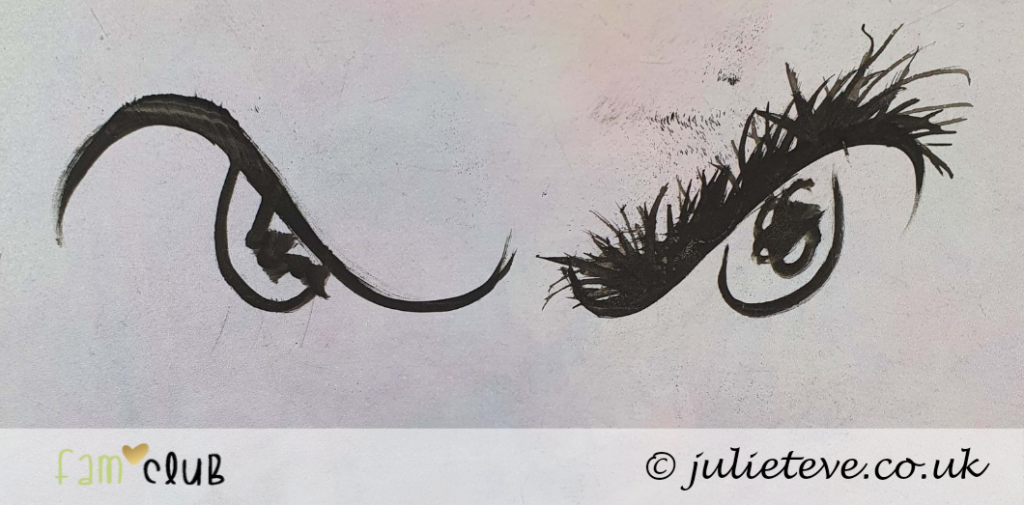
Then there’s direction. A character looking slightly up can feel dreamy or hopeful. A sideways glance adds mischief. Looking down can feel shy, thoughtful or even sad. These are tiny adjustments — but they carry huge storytelling power.
It’s all about the story
Before you start painting, it helps to ask a simple question: What story am I trying to tell?
I often ask clients directly:
Do you want a friendly dragon or a fierce dragon?
A playful, cheeky dolphin or a surprised one?
Should this mermaid feel dreamy, elegant, or mischievous?
These choices guide everything that follows – especially the eyes.
Bringing characters to life
Eyes are often the first thing people notice (right after the rainbow of colours!). A beautifully painted eye doesn’t just finish a design- it animates it. It turns a nice painting into a character with personality, emotion, and presence.
Once you start thinking in terms of expression rather than decoration, your designs stop being faces… and start becoming stories.